
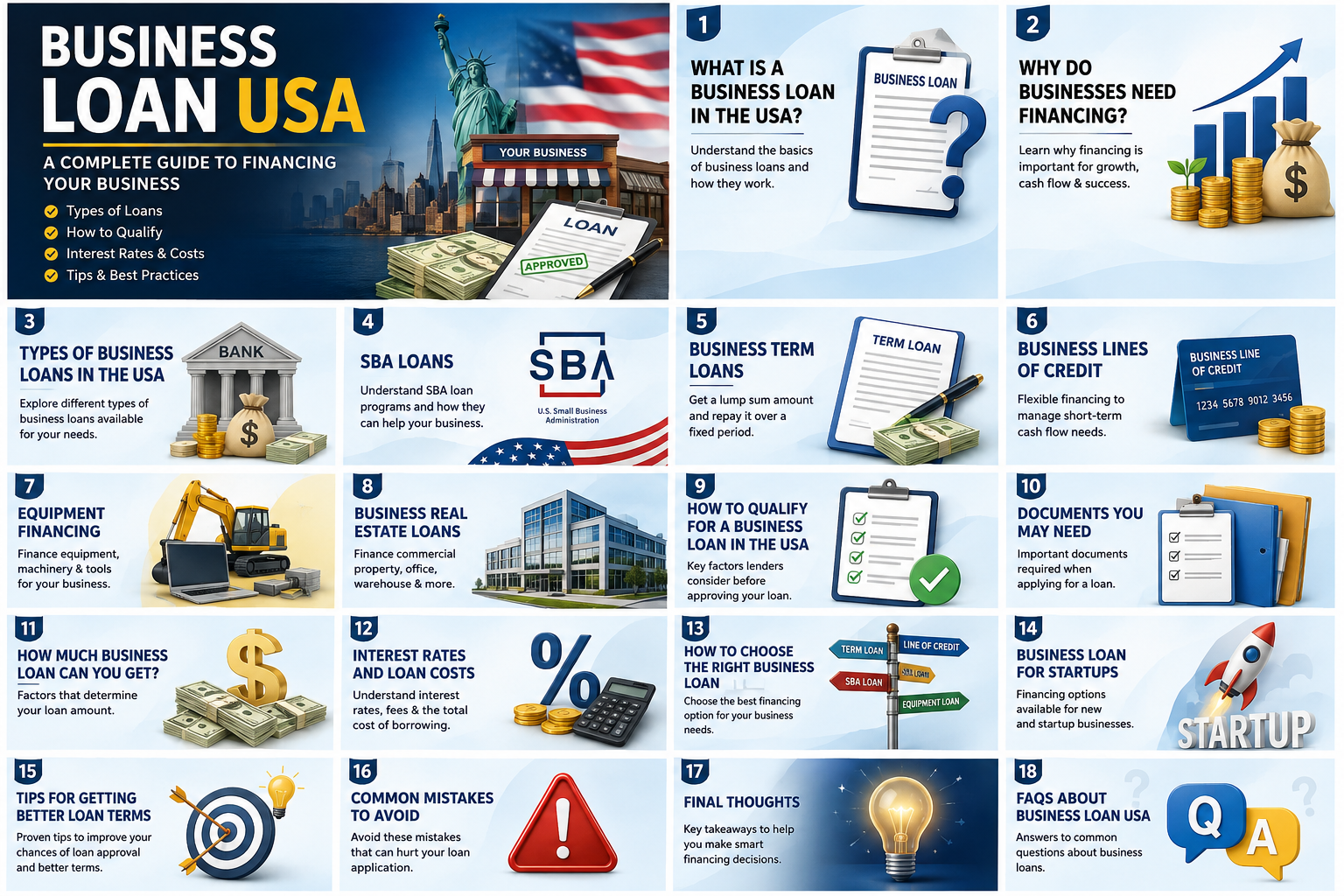
Business Loan USA: Starting or growing a business in the United States often requires more capital than a business owner has available. Whether you want to open a new store, purchase equipment, hire employees, expand to another location, or manage everyday expenses, having access to the right financing can make a significant difference. This is where a business loan in the USA can help.
Business loans are designed to provide companies with the funds they need for specific business purposes. Depending on the lender, loan type, business history, credit profile, and financial situation, business owners may have several financing options to choose from.
In this guide, we will explain what a business loan is, the major types available in the USA, how to qualify, what lenders look for, and how to choose financing that fits your business needs.
What Is a Business Loan in the USA?
A business loan is financing provided to a company or business owner to cover business-related expenses. The borrower generally agrees to repay the borrowed amount over a specific period, usually with interest and applicable fees.
Business loans can be used for many purposes, including:
- Starting a new business
- Expanding an existing business
- Purchasing equipment
- Buying inventory
- Hiring employees
- Renovating a commercial property
- Managing cash flow
- Marketing and advertising
- Purchasing business vehicles
- Refinancing existing business debt
The amount you can borrow and the terms you receive depend on factors such as your business revenue, time in business, credit history, industry, and the lender’s requirements.
Why Do Businesses Need Financing?
Even profitable businesses can experience periods when additional capital is necessary. For example, a company may receive a large order but not have enough cash to purchase inventory. Another business may have an opportunity to open a second location but need money for construction, equipment, and staffing.
A business loan can provide working capital without requiring the owner to use all of their personal savings.
Financing can also help businesses take advantage of growth opportunities. Instead of waiting months or years to save enough cash, an owner may use appropriate financing to invest in the business and repay the loan gradually from future business income.
Types of Business Loans Available in the USA
There is no single business loan that works for every company. Different financing products are designed for different needs.
1. SBA Loans
Small Business Administration, commonly known as SBA, loan programs are among the well-known financing options for qualifying small businesses in the United States.
SBA-backed financing is provided through participating lenders, while the SBA provides certain guarantees according to the applicable program rules. These loans can potentially offer competitive terms for eligible businesses.
SBA financing may be used for purposes such as expansion, working capital, equipment, real estate, and other approved business expenses.
However, the application process can be more detailed than some alternative financing options, and eligibility requirements vary by program and lender.
2. Business Term Loans
A business term loan provides a specific amount of money that is repaid over an agreed period.
For example, a business might borrow money to purchase equipment or expand its operations and then make regular payments over several months or years.
Term loans can be useful when you know exactly how much financing you need and want a predictable repayment structure.
3. Business Lines of Credit
A business line of credit works differently from a traditional term loan. Instead of receiving one large amount upfront, you receive access to a predetermined credit limit.
You can generally draw funds when needed and repay what you use according to the agreement.
A business line of credit can be useful for managing short-term cash-flow gaps, unexpected expenses, seasonal needs, or recurring purchases.
4. Equipment Financing
If your business needs machinery, computers, vehicles, medical equipment, restaurant equipment, or other business assets, equipment financing may be an option.
The financing is specifically designed for purchasing equipment. Depending on the agreement, the equipment itself may serve as collateral.
This can make equipment financing attractive for businesses that want to preserve cash while acquiring important assets.
5. Business Real Estate Loans
Businesses that want to purchase commercial property may consider commercial real estate financing.
These loans can potentially be used to purchase offices, warehouses, retail properties, industrial buildings, or other qualifying commercial real estate.
Because real estate loans can involve significant amounts of money and longer repayment periods, lenders may conduct detailed financial and property evaluations.
How to Qualify for a Business Loan in the USA
Every lender has its own eligibility requirements, but several factors are commonly considered during the application process.
Business Credit
Business credit can play an important role in financing decisions. A strong business credit profile may help demonstrate that a company has a history of managing financial obligations responsibly.
Some lenders may also review the owner’s personal credit, especially when the business is new or has limited credit history.
Business Revenue
Lenders generally want to understand whether your company generates enough revenue to support loan payments.
You may be asked to provide bank statements, income statements, tax returns, or other financial records.
Time in Business
Established businesses often have more financial history for lenders to evaluate. However, some lenders offer financing to newer businesses, subject to their individual eligibility criteria.
Cash Flow
Revenue alone does not tell the complete financial story. Lenders may also examine cash flow to determine whether the business has sufficient funds to meet regular obligations.
Collateral
Certain business loans may require collateral. Collateral can include business equipment, real estate, vehicles, inventory, or other eligible assets.
Some financing products may be unsecured, meaning specific business assets are not pledged as collateral, although other guarantees or requirements may still apply.
Documents You May Need
When applying for a business loan, preparing your documents in advance can make the process easier.
Depending on the lender and loan type, you may be asked for:
- Business tax returns
- Personal tax returns
- Business bank statements
- Profit and loss statements
- Balance sheets
- Business formation documents
- Business licenses
- Identification documents
- Information about existing debts
- Details about the intended use of funds
New businesses may need to provide additional information, such as a business plan, projected financial statements, or information about the owner’s experience.
How Much Business Loan Can You Get?
There is no universal loan amount for every business. The amount a company can qualify for depends on its financial strength and the lender’s underwriting requirements.
A lender may consider annual revenue, profitability, cash flow, credit history, existing debt, collateral, industry risk, and the requested purpose of the loan.
Instead of borrowing the maximum amount available, business owners should consider how much financing they actually need and whether the expected business benefit justifies the repayment cost.
Interest Rates and Loan Costs
The cost of a business loan can include interest, origination fees, application fees, annual fees, late-payment fees, or other charges depending on the financing product and lender.
Interest rates can vary significantly based on the borrower’s credit profile, loan amount, repayment period, collateral, business financials, and market conditions.
Before accepting an offer, look beyond the advertised interest rate. Review the total cost of financing, payment frequency, repayment period, fees, and any conditions associated with the loan.
Understanding the full cost can help you compare different offers more effectively.
How to Choose the Right Business Loan
Choosing financing should start with your business objective.
If you need money for a long-term expansion project, a term loan may be appropriate. If you regularly experience short-term cash-flow gaps, a line of credit may be more useful. If your primary goal is purchasing equipment, equipment financing could be worth considering.
Before applying, ask yourself:
- How much money do I actually need?
- What will the funds be used for?
- How quickly do I need the money?
- How much can my business comfortably repay each month?
- What is the total cost of the financing?
- Does the lender require collateral or a personal guarantee?
- Are there penalties or additional fees?
Answering these questions can help you avoid choosing financing based only on the loan amount.
Business Loan for Startups
Getting a business loan can be more challenging for startups because a new company may not have an established revenue history or business credit profile.
However, startup financing options may include SBA-related programs, business credit cards, equipment financing, lines of credit, and other forms of small-business financing, depending on eligibility.
A strong business plan can be particularly helpful for a startup. It should explain the business model, target market, competitive environment, expected revenue, expenses, and exactly how the requested financing will be used.
Tips for Getting Better Business Loan Terms
Business owners can take several steps to strengthen their financing application.
First, keep accurate financial records and separate personal and business finances. Maintaining organized accounts makes it easier to demonstrate the financial health of your company.
Second, monitor both business and personal credit where relevant.
Third, reduce unnecessary existing debt before applying when possible.
Fourth, prepare a clear explanation of how the loan will generate value for the business.
Finally, compare multiple financing offers instead of accepting the first offer you receive.
Common Mistakes to Avoid
One of the biggest mistakes is borrowing more money than the business can comfortably repay.
Another mistake is focusing only on the monthly payment. A longer repayment period may reduce the monthly payment but increase the total amount paid over time.
Business owners should also carefully review the loan agreement before signing. Pay attention to interest rates, fees, repayment schedules, collateral requirements, personal guarantees, and default provisions.
Avoid financing decisions based solely on advertisements or promises of guaranteed approval. Legitimate lenders generally evaluate the applicant’s financial situation and eligibility.
Final Thoughts
A business loan in the USA can be an important financial tool for entrepreneurs and established companies. The right financing can help a business manage cash flow, purchase equipment, expand operations, hire employees, or take advantage of new opportunities.
However, borrowing money is a major financial decision. Business owners should compare loan types, understand eligibility requirements, calculate the total cost, and make sure the expected business benefits justify the repayment obligations.
Whether you are launching a startup or expanding an established company, taking time to understand your financing options can help you make a more informed decision. The best business loan is not necessarily the one offering the largest amount of money—it is the financing option that matches your business purpose, financial capacity, and long-term goals.